
I’ve left a restaurant in an ambulance before, having an anaphylactic reaction and not fully understanding what was happening to me.
It was frightening, but it’s also something I haven’t talked about much. For a long time, I thought of it as an experience that had happened to me because I was part of a small minority. Something personal, rather than part of a wider problem.
The reality is that millions of people live with food allergies. The Food Standards Agency estimates that around 2.4 million adults in the UK have a food allergy, while the UN’s Food and Agriculture Organisation puts the worldwide figure at approximately 220 million people.¹
What happens after a reaction?
A serious allergic reaction can stay with someone long after the immediate emergency has passed. It can affect their confidence, where they choose to eat and how comfortable they feel trusting someone else to prepare their food.
But other diners may never hear about it. An experience might be shared with friends, raised with a business or simply never discussed again.
Dan, my co-founder, and I both live with severe food allergies. We built TrustDiner to help people make more informed decisions about where to eat and travel. Making reported reactions easier to find is another part of that work.
How the tracker works
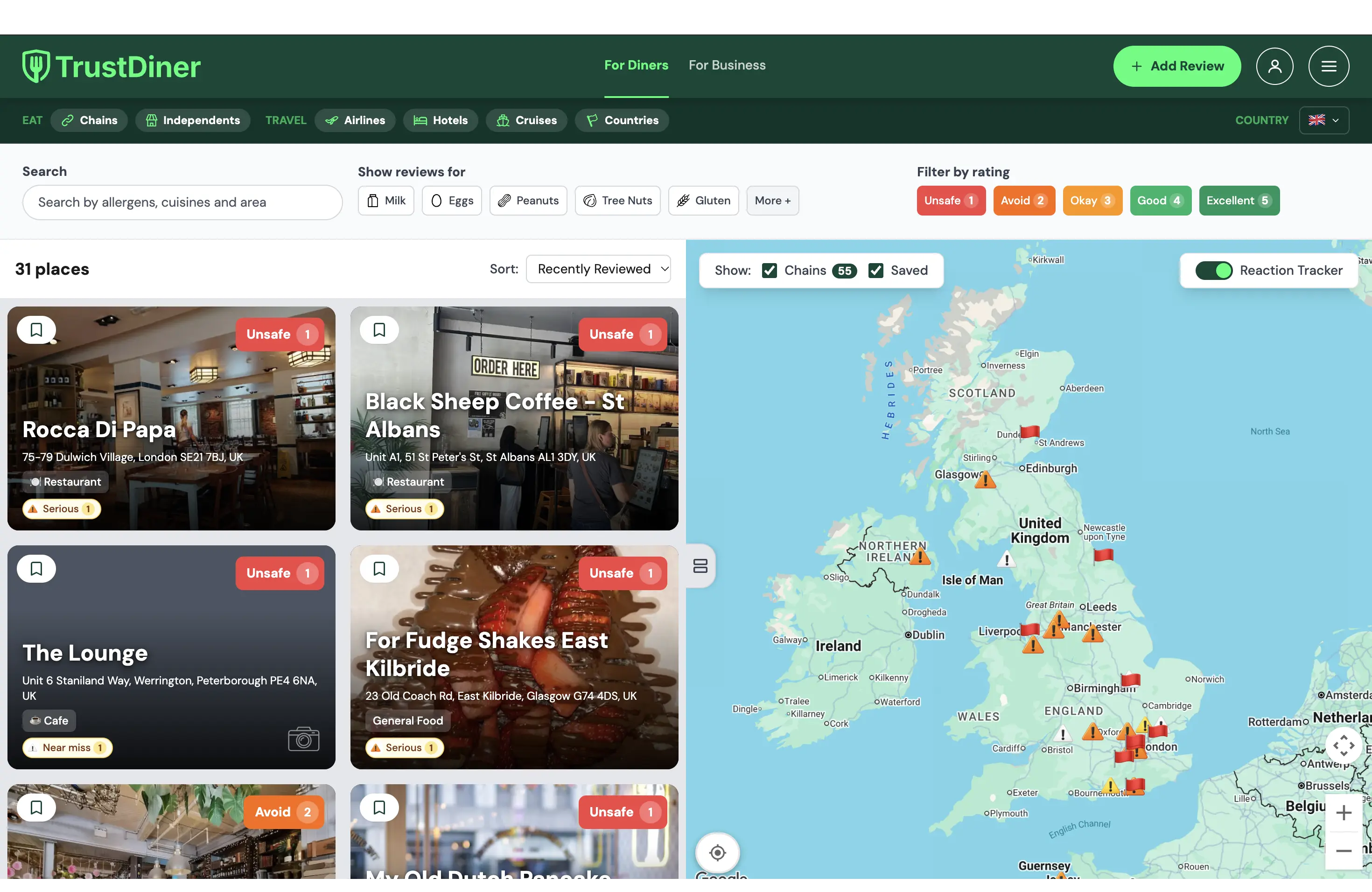
The tracker brings together diner reports of allergic reactions and near misses at restaurants, pubs and travel providers.
You can explore those reports through TrustDiner’s map, read what people say happened and share your own experience as part of a review.
Every report is labelled as a self-reported experience. TrustDiner does not medically verify reactions or establish whether a venue caused them.
That distinction matters. These are people’s accounts of their experiences, offered to help others understand what has been reported. They cannot guarantee how safe a future visit will be.
Why making these experiences visible matters
Professor Adam Fox OBE, Chair of the National Allergy Strategy Group, said:
“TrustDiner's Anaphylaxis Tracker is an important initiative, giving the allergy community a way to share serious reactions experienced when eating out. Making these experiences visible could help people make more informed choices, improve awareness across the hospitality industry and, ultimately, help reduce the risk of life-threatening reactions.”
We hope the tracker will help diners ask more informed questions and help hospitality businesses recognise where communication and procedures may need attention.
It will also give people somewhere to share an experience they may previously have kept to themselves. For me, that matters. Something that felt isolated and personal can become part of a wider conversation about what needs to improve.
Share your experience
The tracker is a starting point. It will become more useful as more people contribute their experiences.
If you’ve experienced an allergic reaction or a near miss while eating out or travelling, you can help by sharing what happened.